Wellbeing 3 min read
How Stress Can Affect Desire and Wellbeing
Discover how chronic stress and fatigue often mimic age-related libido decline. Learn how your body prioritizes resources and how to restore your wellbeing.
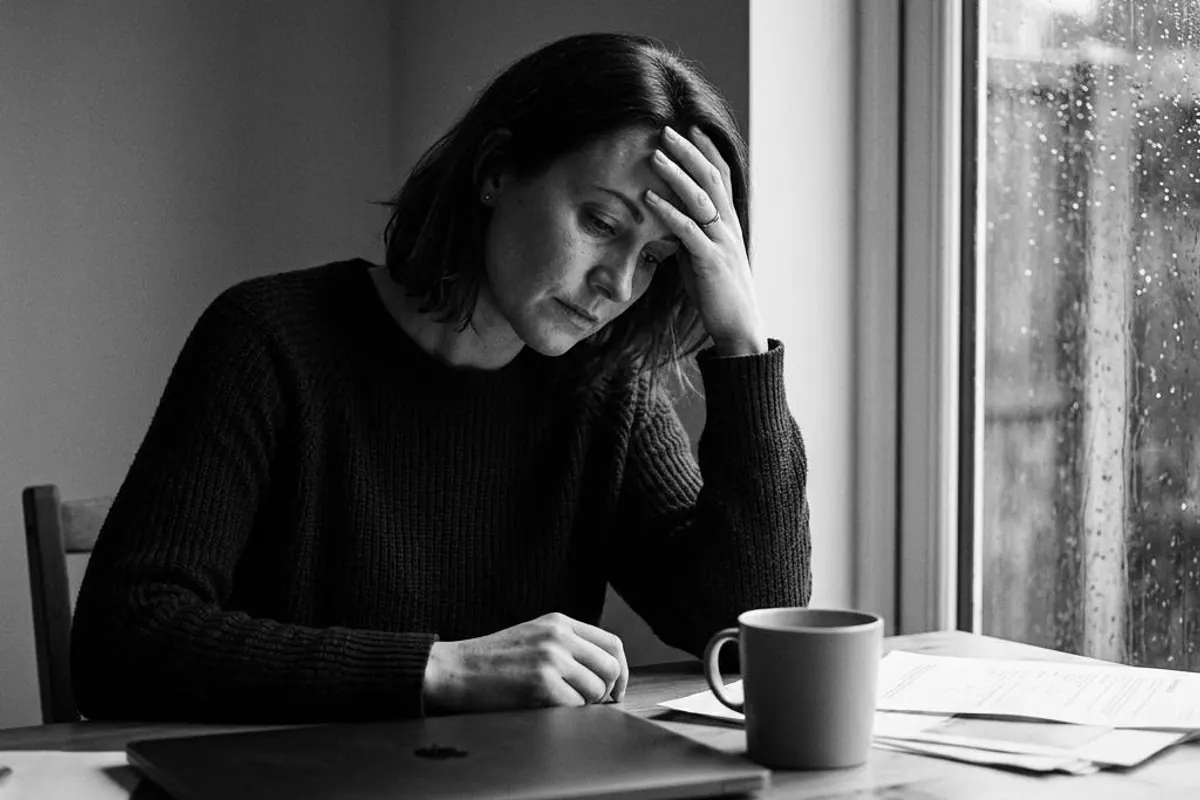
There is a convenient explanation for everything these days: "What do you expect at your age?"
Less energy? That's age. Poor sleep? That's age. Decreased libido? Must be age.
The problem is that this explanation is almost always inaccurate. One of the most common causes of reduced sexual desire is not age, but chronic stress and accumulated fatigue. These are difficult to notice because they build up gradually. By the time you realize something has changed, you have already accepted this background state as the new normal.
How the Body Prioritizes
Sexual desire is not an autonomous function. It is not something that operates by itself like breathing or a heartbeat. It requires specific conditions to function: a sense of safety, surplus energy, and the absence of anxiety. When these conditions are met, the system works. When they are not, your body redistributes its resources.
The logic is simple: during chronic tension, the body enters a survival mode. It prioritizes the most essential functions—basic productivity, concentration, and physical health. Everything else, including pleasure and sexual expression, is sidelined.
This happens not because something is broken, but because the body is reprioritizing.
Cortisol and Desire
Chronic stress keeps cortisol levels constantly elevated. This is a hormone that normally helps you mobilize during an acute emergency. However, when it remains at a high level for too long, side effects occur.
One of these is a decrease in the sensitivity of the dopamine system—the system responsible for motivation, interest, and the feeling of pleasure. Simply put, stimuli that used to work no longer trigger the same response.
Sexual desire is particularly vulnerable here because it requires two things simultaneously: the activation of the reward system and a feeling of safety. Chronic stress disrupts both.
Why it is Often Mistaken for Aging
It is interesting that many changes attributed to age are actually the results of lifestyle.
Years of sleep deprivation, working without proper recovery, carrying a constant background list of tasks, and never truly switching off in the evening all accumulate. This manifests as fatigue, reduced sensitivity, and a loss of interest in everything, including sex.
Age often just happens to be present in the background, serving as the backdrop against which the actual state of the nervous system is visible.
What This Looks Like in Practice
Desire usually does not disappear abruptly. It is more common to experience less spontaneous interest, or a feeling that your "mind is occupied elsewhere" even when there is nothing urgent happening. You may find you need stronger stimuli than before. You might notice less emotional engagement—everything may work physically, but it feels detached.
It is important to note that your physiological capacity remains. It is the level of system activation that changes, which is a fundamental difference.
Why a Holiday Does Not Always Help Immediately
The logical expectation is that if you catch up on sleep and get away for a break, everything will return to normal.
Sometimes this is true. However, after prolonged stress, the nervous system does not switch back instantly. It has adapted to high tension as the new norm. Rebuilding takes time—not just one good holiday, but a change in your overall rhythm.
One week of rest cannot outweigh two years of chronic overload. It is simply the mathematics of recovery.
What Actually Works
The key is not to force the "stimulation of desire," but to reduce background tension.
As cortisol levels gradually normalize, sensitivity to dopamine returns. The sexual system begins to respond to familiar stimuli again—not because you specifically worked on it, but because you removed what was obstructing it.
Improvement almost always starts with basics: quality sleep, genuine recovery, reduced chronic workload, and emotional relief. In this context, libido is not the starting point, but an indicator. It shows how the system is living as a whole.
If desire has decreased, it is rarely just about age. Most often, it is a signal: the system is overloaded and operating in a survival mode. Libido does not disappear; it retreats to where the body considers it a lower priority until resources are restored. When those resources return, libido often comes back—sometimes surprisingly quickly.
If you have concerns about your health, libido, or chronic fatigue, consider consulting with a GP or a sexual health specialist.