Culture 4 min read
Ancient Slavic Perspectives on Intimacy and Tradition
Explore how ancient Slavic cultures viewed the body, nature, and social rituals, offering a historical perspective on evolving concepts of human connection.
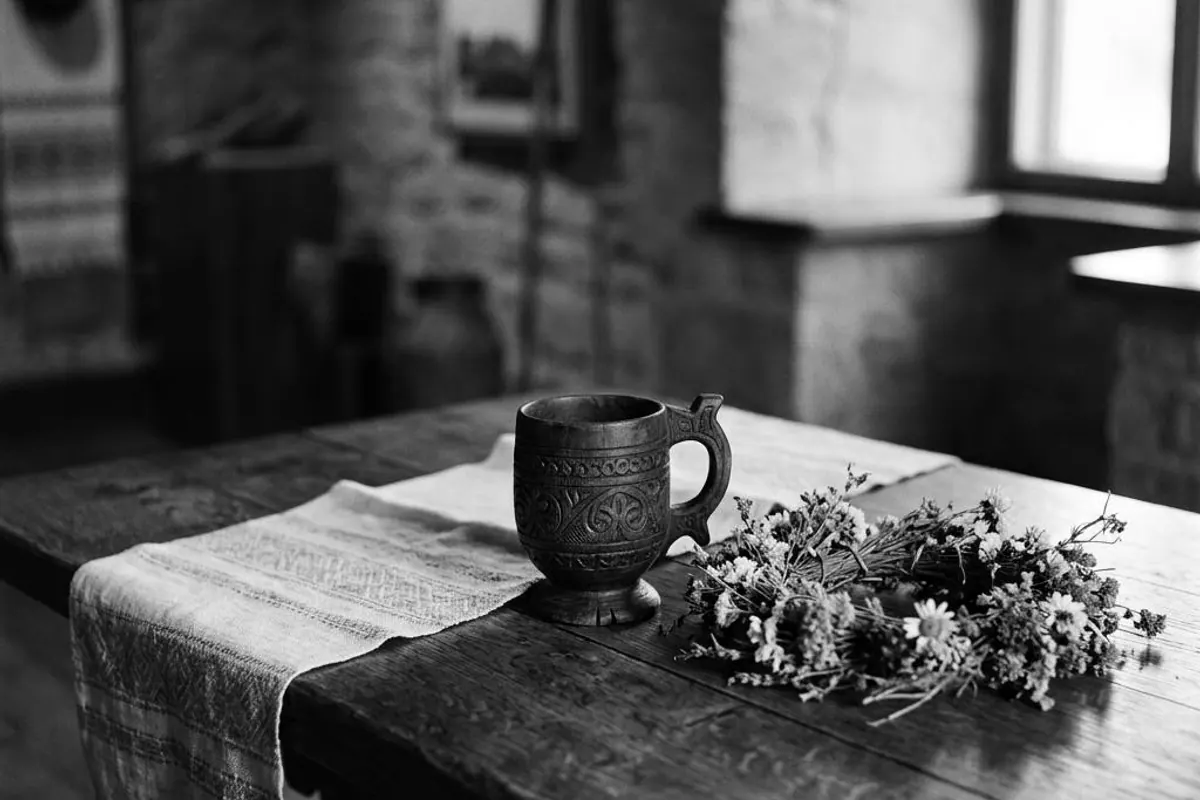
Conversations regarding the intimate culture of ancient Slavic peoples often oscillate between sensationalism and misunderstanding. Some sources paint it as a realm of near-total freedom, while others view it through a lens of pagan peculiarities eventually suppressed by Christian morality. Stripped of these extremes, a more nuanced picture emerges: a culture where physicality was deeply integrated with nature rather than viewed as an autonomous, private sphere.
The primary challenge is the scarcity of direct evidence regarding private life. Chronicles were produced within religious environments, folklore was recorded much later, and 19th-century ethnographers observed a already transformed rural society. Consequently, all reconstructions remain interpretations based on fragmented historical evidence.
The Body as Part of the Natural Order
To understand how ancient Slavs perceived the body, one must recognize the agricultural foundation of their society: individuals did not perceive themselves as separate from the natural cycle.
Life revolved around the land, the harvest, and seasonal shifts. In this context, birth, sexuality, and fertility were not considered private matters, but rather integral continuations of natural processes.
Many ritualistic practices that might appear erotically charged to modern observers were often symbolic actions—attempts to influence the world through forms and gestures that felt tangible and meaningful to the ancient mind.
Kupala Night: A Time of Blurred Boundaries
One of the most persistent themes in descriptions of ancient Slavic traditions is the cycle of summer festivals associated with water and fire.
Kupala rites represented rare moments in traditional culture where social norms became flexible. Mass gatherings, bonfires, and nocturnal transitions between spaces created a collective state of permissive release, where the rigidity of daily life was temporarily suspended.
It is important to note that for the archaic mindset, these periods were not chaotic. On the contrary, they were part of a regulated seasonal rhythm, a controlled release of tension before returning to the established social order.
Later church texts describing these festivals provide harsh judgments of these events, capturing the friction between two competing worldviews—pagan and Christian—rather than providing an objective account of the rituals themselves.
The Land as a Living Body: Agricultural Ritual Logic
A distinct layer of traditional culture is linked to agrarian rites. Here, the metaphor of the earth as a living creature capable of responding to human action is particularly prominent.
In certain local traditions, there were beliefs that the fertility of the soil was connected to the actions of the community during sowing. While these are often interpreted literally today, they were rooted in symbolic, rather than purely physiological, thinking.
The purpose of such practices lay in the concept of participation: individuals were not merely tilling the earth, but entering into a relationship that required the right mental state and appropriate symbolic actions.
The Banya as a Space Beyond Daily Control
In traditional culture, the banya (steam bath) was much more than a place for hygiene; it was a space where domestic, therapeutic, and ritualistic functions converged. It was frequently perceived as a zone of temporary exit from the standard social hierarchy, placing individuals in a vulnerable yet natural state, stripped of typical social roles and distances. This made the banya a pivotal element for significant life transitions, from pre-wedding preparations to family rituals.
Marriage as a Social Transition
The modern perception of marriage as the pinnacle of a romantic journey is largely inapplicable to the ancient context. In traditional society, marriage was primarily a social mechanism regulating bonds between families and households. Consequently, the ceremonial aspects of a wedding were saturated with symbolic actions designed to cement the individual's new status within the community.
While physical and emotional components were present, they were embedded within a broader context of community-validated transition, rather than being limited to the personal experience of two individuals.
The Female Body in the Symbol System
In folklore and ritual, representations of the female body held a specific place, often linked to the concepts of fertility and the continuity of life within agrarian society.
It is important not to oversimplify this imagery into mere eroticism. Rather, it functioned as a symbolic language describing fundamental natural processes: birth, growth, and renewal.
Such representations are not unique to Slavic peoples; they are found in most traditional societies where the human body is viewed as a component of the natural cycle, rather than an autonomous individual category.
Historical Perspective Today
When later interpretations and ideological layers are stripped away, a coherent picture remains. Physicality in ancient Slavic culture was not relegated to the sphere of the private as understood today; it existed within a system of nature, agricultural cycles, and communal relations. Consequently, many actions documented in later sources may appear more pronounced to modern readers than they likely did to those living through them. Ultimately, this was not a question of freedom versus restriction, but a different way of organizing the world, where individuals were not as sharply separated from nature and social rhythms as they are in contemporary society.