Culture 4 min read
The Grandes Horizontales: Shaping Parisian Culture
Explore the lives of 19th-century Paris's legendary grandes horizontales, women who navigated social barriers to wield influence, culture, and power.
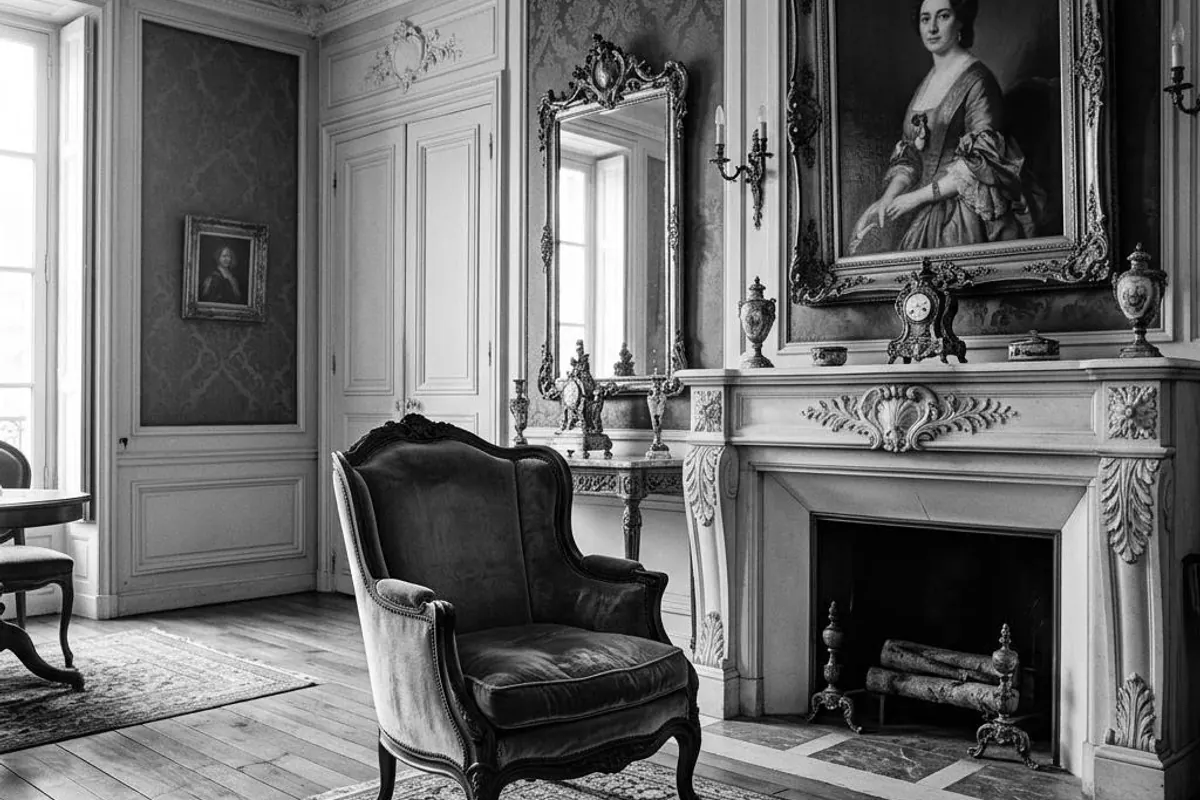
In the mid-19th century, a distinct group of women emerged in Paris known as the grandes horizontales. While formally outside the boundaries of high society, their influence frequently transcended the boudoir. These women maintained opulent estates, dictated fashion trends, patronized artists and writers, and often found themselves in close proximity to those wielding real political power.
Their patrons included bankers, ministers, and members of European dynasties. Their names appear throughout the memoirs, novels, and private correspondence of the era. Some served as archetypes for literary heroines, while others secured their place in history through the sheer brilliance of their reputations.
An Era Where Origins Ceased to Be a Sentence
The zenith of the grandes horizontales occurred during the Second French Empire under Napoleon III. Paris was rapidly growing in wealth and undergoing massive urban transformation to become the capital of European pleasure. Although traditional class barriers persisted, wealth, charm, education, and social poise increasingly unlocked doors that had previously been firmly shut to social climbers.
It was during this period that several women successfully transformed their dependent status into a source of genuine, albeit informal, authority. They were welcomed into salons, featured in the press, and discussed on equal terms with ladies of aristocratic lineage.
Marie Duplessis: The Inspiration for The Lady of the Camellias
Marie Duplessis arrived in Paris with almost no resources, yet quickly found herself at the heart of the city's life. Contemporaries noted not only her beauty but an education rare for her milieu, as well as her tact and capacity for engaging conversation with people from all walks of life.
She became the prototype for Marguerite Gautier in Alexandre Dumas fils' novel, The Lady of the Camellias. Dumas knew her personally and, according to some reports, was intimate with her. The novel was later adapted into Verdi's immortal opera, La Traviata. Thus, the story of this Parisian courtesan has lived on stages worldwide for over a century and a half.
La Païva and Her Legendary Mansion
Esther Lachmann, known as La Païva, was born into a poor family within the Russian Empire. Over time, she became one of the most prominent figures of the Parisian demi-monde and eventually married the Prussian Count Guido Henckel von Donnersmarck.
A true palace, the Hôtel de la Païva, was built for her on the Champs-Élysées. Decorated with marble, onyx, and bronze, it was considered by contemporaries one of the most spectacular private homes in Paris. Napoleon III visited personally to admire the interiors. The building stands today as the residence of the Travellers Club.
A famous legend surrounds her: it is said that an admirer offered an enormous sum for a night, only for her to burn the money in front of him. While no documentary evidence exists, the story effectively illustrates the persona La Païva crafted: a woman who valued spectacle and power over mere money.
Cora Pearl: Energy and Scandal
Emma Crouch, who went down in history as Cora Pearl, arrived from England. Her name was linked to Prince Napoleon Joseph (Plon-Plon) and other influential men of the Second Empire.
Though not considered a classic beauty, everyone noted her wit, sense of humor, and ability to entertain a jaded public. She loved horseback riding, maintained a large stable, and never feared drawing attention.
Her most famous moment was a surprise appearance on stage in Offenbach's operetta Orpheus in the Underworld as Cupid. It was done without preparation, yet met with immense success, and Paris spoke of it for weeks.
Apollonie Sabatier: Hostess of the Intellectual Salon
Apollonie Sabatier, known as La Présidente, became famous not for displays of wealth, but for the circle that gathered in her home. Baudelaire, Flaubert, Théophile Gautier, and other key figures of the French bohemia were her regular guests.
Auguste Clésinger created a marble portrait of her, and Baudelaire dedicated poems to her that were included in Les Fleurs du mal (The Flowers of Evil).
Shared Attributes
Their life paths varied: some built palaces, others fostered intellectual spaces, and some lived to shock the public. Yet they were all united by one trait: the ability to turn personal connections into social influence.
They shaped the tastes of their era, supported artists and writers, and became muses and subjects of works. Frequently, their names outlived those who had once paid for their status.
Why We Still Remember Them
During their lives, they were simultaneously worshipped and condemned. Today, they are viewed differently: as a significant part of the cultural history of the Second Empire. Their biographies offer insight into how society truly functioned at the time.
Beyond all the beautiful legends and scandalous tales, the core remains: in an environment of extremely limited opportunity, these women managed to leave a significant mark on French culture. This is why people continue to write about and debate them even a century and a half later.