Culture 3 min read
Art History Through the Lens of Desire
Explore how centuries of European art have navigated the depiction of transactional relationships and social intimacy through changing cultural masks.
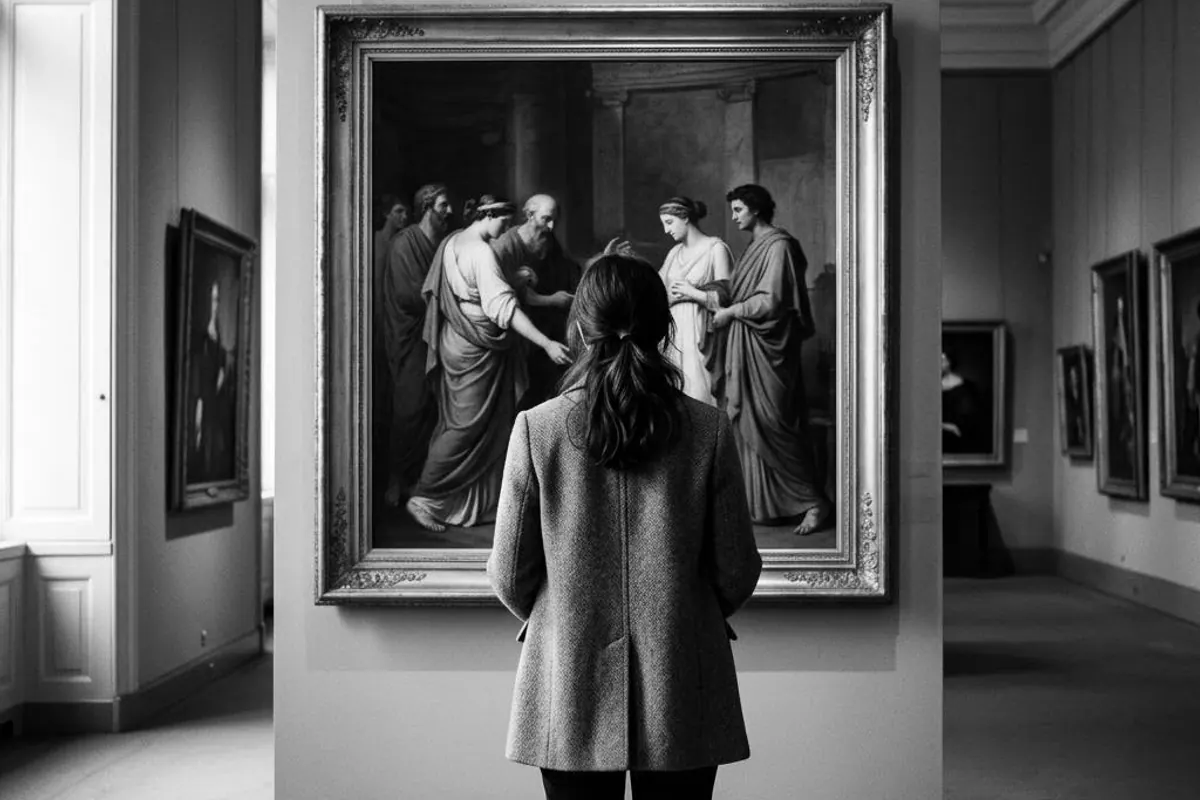
European culture has long grappled with a recurring theme that shifts its appearance across the centuries. Often masked by religion, moral posturing, or everyday domestic scenes, this subject matter remains consistently recognisable.
Transactional intimacy has been one of the most persistent subjects in art history, not merely because it is provocative, but because it has always been an intrinsic part of urban life. Artists have frequently been the first to document what society preferred to keep carefully concealed.
Saints Who Were Never Only Saints
Mary Magdalene stands as a fascinating visual paradox in Western painting. Formally presented as a symbol of repentance, she remains one of the most deeply human female figures in religious art, possessing a vitality that transcends mere symbolism.
Renaissance artists instinctively amplified this tension. Their depictions of the Magdalene are not just ideas but vibrant presences. Crucially, these artists often used real women from their urban environments as models—individuals whose lives often defied strict moral boundaries. Rather than creating a scandal, painters used this as a technique to transform lived reality into a form that society could accept.
Venice: A City Where Women Were Part of the Cultural Economy
The Venice of the 16th and 17th centuries is often romanticised, yet it was a city defined by a distinct tier of high-status courtesans. Their influence reached far beyond the private sphere; they were integral to intellectual and social life, engaging with writers, artists, and figures of the cultural elite. Figures like Veronica Franco exemplify this intersection of attractiveness and social power.
Ultimately, in this system, feminine appeal served as a social tool, and one's reputation was a foundational component of a complex economic model.
17th-Century Holland: Morality as Decor
While Protestant Holland officially discouraged non-marital relationships, it simultaneously produced a remarkably honest visual language concerning daily life.
17th-century genre painting captured scenes of brothels, taverns, and private rooms as standard subjects. What is striking is not the subject itself, but the matter-of-fact way it was documented. The composition usually features people, money, and social interaction. While a nod to morality might be included, it often feels like a mere formality that does not dictate the scene's content. This art does not seek to expose; it simply records.
19th-Century Paris: The Disappearing Distance
By the 19th century, European painting reached a point where traditional symbolism hindered authentic expression. Paris had become too multifaceted to be described through mythology, leading artists toward direct depictions of urban reality. This triggered sharp public reactions, not necessarily because of the subject matter, but because the usual interpretive buffer—where the viewer was told how to perceive an image—had vanished.
Weimar Germany: The City Without Filters
Following World War I, art became increasingly direct. Artists like Otto Dix and George Grosz were not concerned with pleasing their audience but with examining the structure of a post-catastrophe city.
In this context, transactional intimacy ceased to be a separate, hidden theme. It became as visible a part of the urban infrastructure as transport or advertising. This shift marked a fundamental change: the perceived need to justify the depiction of such scenes had disappeared.
When the Artist Ceases to be an Observer
In the second half of the 20th century, the role of art underwent a transformation. The artist stopped merely recording reality and began participating in it, becoming a component of the situation being described.
Transactional intimacy moved into performance art and conceptual practices, where the context and the boundaries of interaction became more significant than the image itself. Art shifted from depicting life to testing the limits of social norms.
Beyond individual styles and movements, a clear line of observation remains. The depiction of transactional intimacy in European art has never really been about the act itself, but about the boundaries of what is acceptable to show. From the Magdalene to modern art, society’s willingness to view reality without ornaments or excuses has been the only true constant.